Design Guide
Chimera (Uncommon)
Category: Oddities
Overview:
- Causes patches of another color on the coat, according to the specifications below.
- On foals, Chimera may be anything genetically possible from the parents. In breedings, it is automatically rolled for color.
- On imports, Chimera is based on the main phenotype. You may remove genes found in the base pheno, switch the base color (e/a genes), and add up to 1 natural marking/modifier.
- Rapunzel, oddities, and carried genes are not listed in the Chimera pheno.
- Ranges in size and shape of coverage, but should be no smaller than the hoof and no larger than half of each separate side of the body.
- Each area of coverage should be a distinct patch, not striping/brindling, a geometric/special shape, etc. Edges are somewhat irregular.
- May have up to 3 different patches total. Each should have a main area of concentration, not branch all the way across the body.
- Markings should not line up perfectly at the edges between base coat and Chimera patches. This includes continuous stripes, white markings, etc.
- Chimera and Patchwork cannot exist on the same horse.
- Effect on Mane/Tail:
- Neck patches should continue into the mane.
- If a Chimera patch covers the dock of the tail, the tail must be affected (partial or full coverage).
- If no patch is present at the dock of the tail, up to half of the tail can optionally be affected by Chimera on its own.
Interactions:
- Oddities* found on the base coat may also show on the Chimera coat without being in the Chimera pheno.
- *This excludes Chimera/Patchwork itself. To add an additional layer of Chimera inside the existing Chimera patches, you'll need to use a Tornado item.
Range:
- Minimum: One visible patch at least as large as the hoof.
- Maximum: Three patches on the body and one patch in the tail.
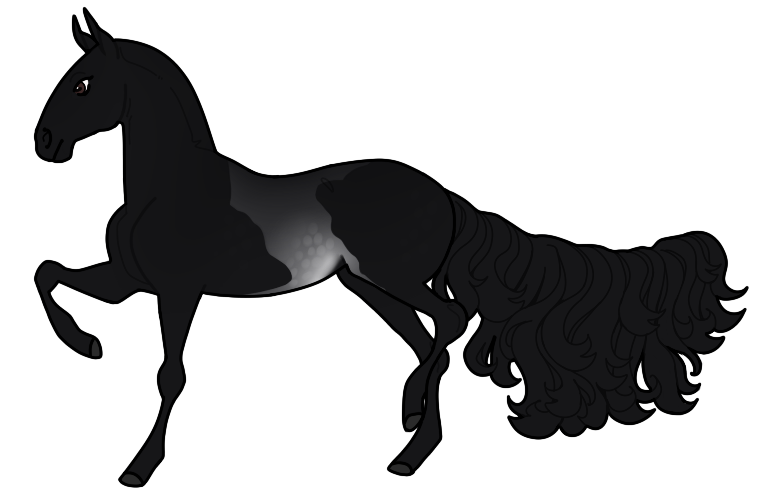
Black Rapunzel + Chimera (Grey on Black)

Latte Tobiano Splash Corset + Wulf, Halo, Chimera (Espresso Tobiano Splash)
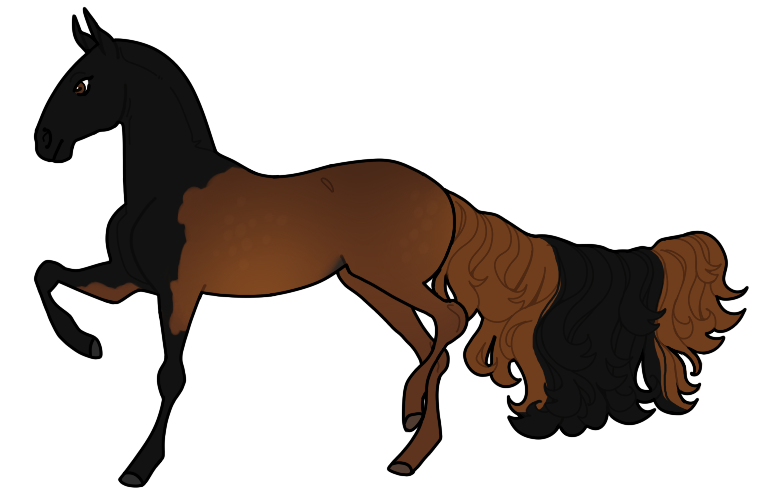
Chestnut Rapunzel + Chimera (Black)
Brindle (Uncommon)
Category: Oddities
Overview:
- Brindle may be present on some or all of the body.
- Can be darker than the base (normal) or light/white ("Reverse Brindle")
- Stripes should be relatively thin and textured, not to resemble zebra striping, primitive dun/bengal, etc.
- Stripes should follow the flow/curves of the body, not be perfectly straight nor overly curvy/swirled.
- Thickness will vary and ends should taper.
- Mane/Tail: No effect
- Skin: No effect
- Eyes: No effect
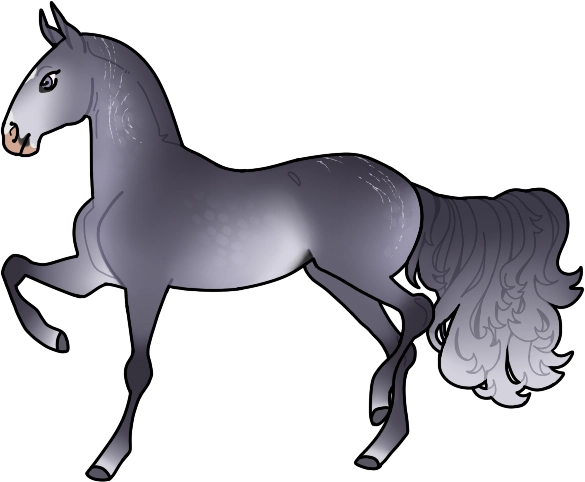
Grey on Onyx + Brindle

Amber Champagne + Brindle
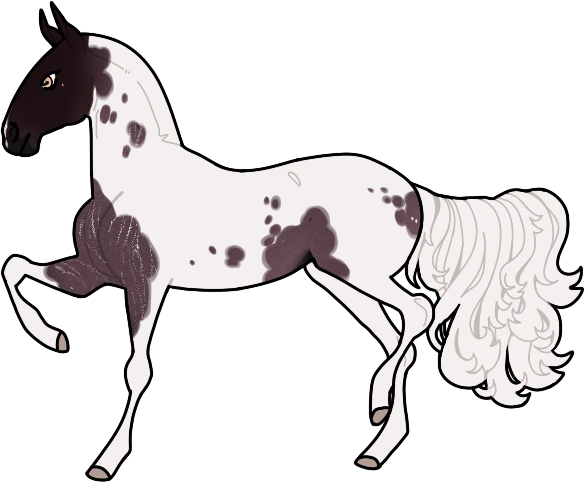
Black Plum Roan Tobiano + Gemstone, Birdcatcher Spots, Brindle
Rift (Uncommon)
Category: Oddities
Overview:
- Causes a dark marking with striped edges that runs from the topline to the underside.
- Marking shape should be a smooth line from end to end, not be jagged, peaked, or double back on itself.
- Edges of the marking should be striped/brindled, following the flow of the marking and staying close to edge.
- Markings will start and end at the same place on both sides of the horse, and should thus be fairly symmetrical.
- Rift will always be darker than the darkest point of the base coat, including areas hidden by white.
- Head Markings:
- Should start in the green area of the chart on the right, and end somewhere in the red.
- Must cross at least half of the eye, and should not be wider than about 1/3 of the head length.
- Body Markings:
- Should start in the blue area of the chart, and end in the orange. Should not be wider than the length of the head.
- If marking reaches the legs, it can either cover the entirety of the leg or end diagonally/horizontally (should not "split" leg vertically).

- Mane/Tail: No effect
- Skin: Darkens the skin where crossing if Rift is black, otherwise keeps normal skin color
- Eyes: Causes blindness; should be pale blue* with the pupil lowered in opacity.
- *When Gemstone is present, eye may be any pale shade, but should still be blind.
- When accompanied by Grey, it will desaturate as the coat does, but may or may not lighten.
Range:
- Minimum:
- One marking on either the head or body.
- Blind eyes.
- Maximum:
- One marking on the head.
- One marking on the body.
- Blind eyes.

Smoky Blue Roan + Rift

Grey on Black + Rift

Blueberry + Rift
Marbled (Uncommon)
Category: Oddities
Overview:
- Inspired by African Wild Dogs, Marbled causes the mapping around white markings to become dark instead.
- The border can be fairly uniform in thickness or can vary.
- Marbled must be noticeably darker than all areas of the coat that it crosses, and should be one solid color throughout.
- Affects everything listed under "White Markings" on the Visual Hierarchy page, with the following exceptions:
- Marbled acts on solid edges ONLY. it will not border powdery/blended textures like Rabicano, Varnish Roan, or some Sabinos.
- When paired with Halo, the Marbled color will take over the entire Halo coverage, making all extended mapping dark.
- Mane/Tail: No effect
- Skin: No effect
- Eyes: No effect
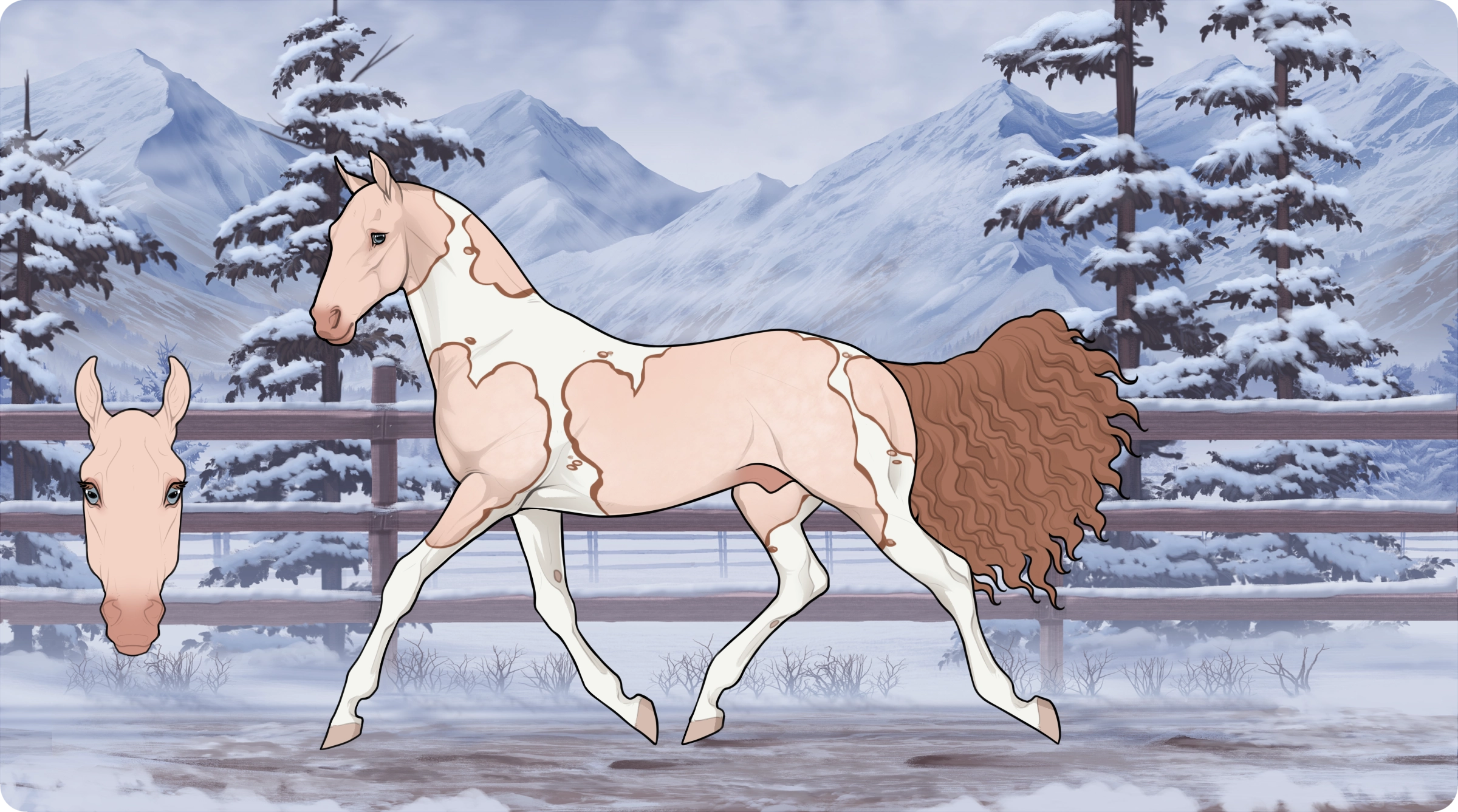
Perlino Tobiano (Carries Rapunzel) + Marbled
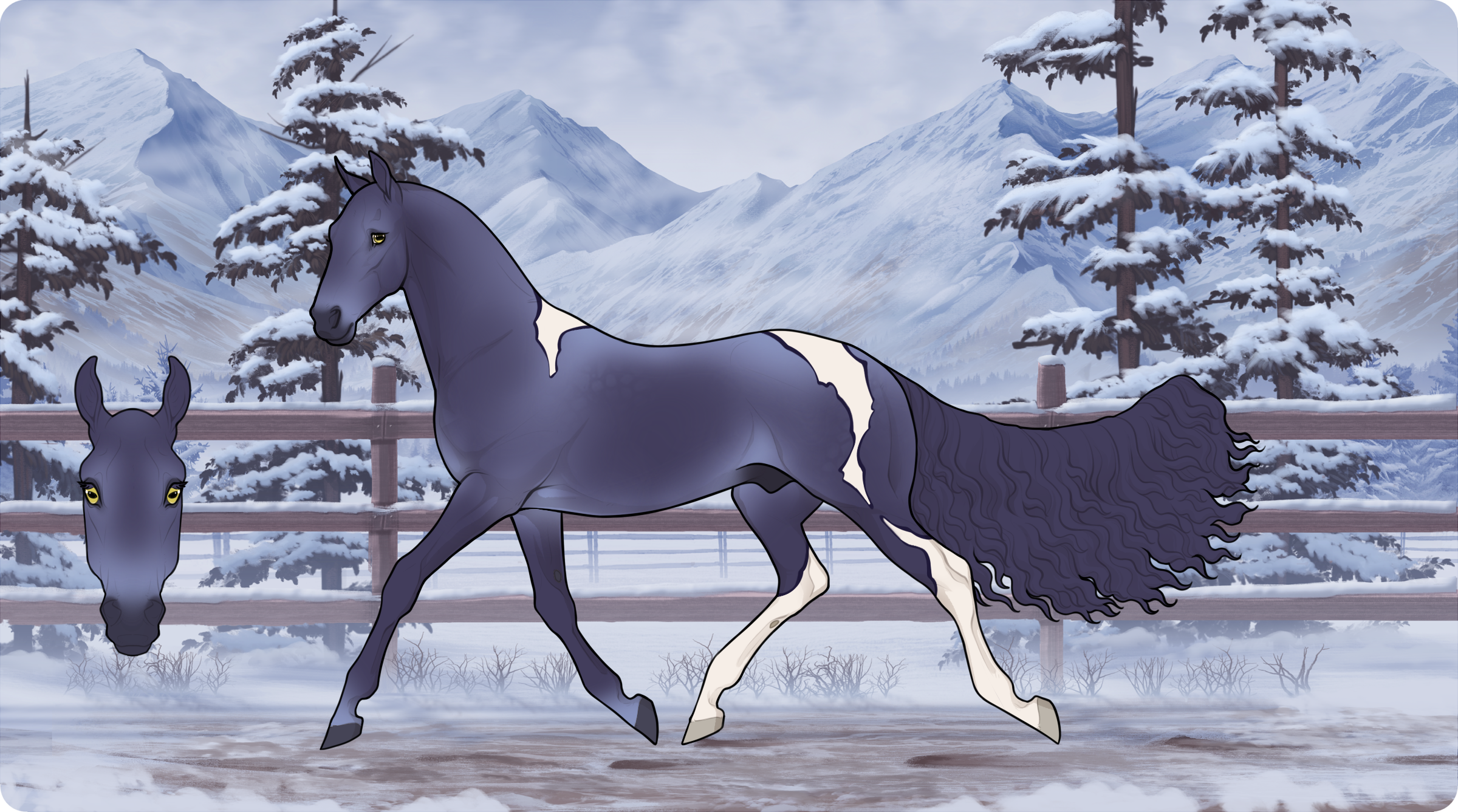
Hyacinth Tobiano Rapunzel + Marbled
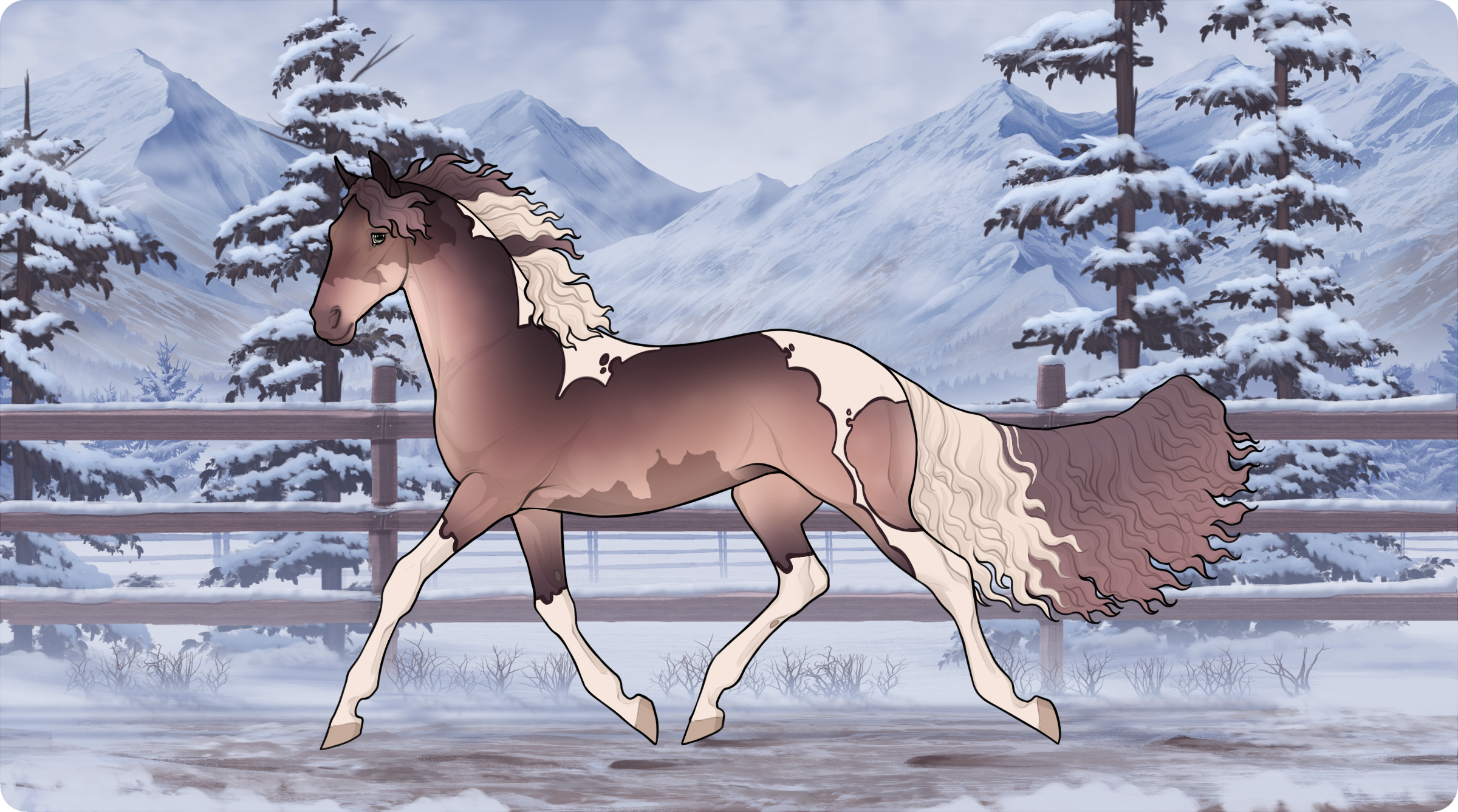
Stained Sooty Pangare Cypress Tobiano Rapunzel + Marbled, Wulf
Capensis (Uncommon)
Category: Oddities
Overview:
- Lightened marking that presents on the muzzle, over the eye, and optionally along the centerline of each side of the body.
- Each section should be clearly tapered/sharp. The longer a section is, the wider it should be in the middle.
- Markings should always flow in the following ways/directions:
- Muzzle - tapers between nostril and mouth, pointing toward inner eye corner.
- Eye - follows the top of the eye (should not wrap around underside), tapering out toward the neck.
- Neck/Body - follows the flow of the body, curving especially noticeably on the shoulder and hindquarters.
- Mane/Tail: No effect
- Skin:
- Muzzle skin is tinted pink. On dark skin, it becomes a desaturated dark pink, only slightly lighter than the skin below it. On skin that is already pink, it becomes a slightly lighter shade of pink.
- Eye skin is unaffected by Capensis, and will remain the same color as the base already causes.
- Eyes: Causes orange or gold (may have slight peachy hue).
Range:
- Minimum:
- Muzzle marking that crosses between the nostrils and under the chin. Taper should reach at least halfway between nostril and eye. Muzzle spots are optional, but may be present.
- Eye marking that lines the top of the eye, big enough to be clearly visible with a slight "wing" at the outer corner.
- Maximum:
- Muzzle marking that crosses just over the top of the nostrils and covers the entire chin. May connect to eye marking.
- Eye marking covers everything but the underside, tapering out to the edge of the jaw.
- Stripe that follows the center of the body, broken into at least two segments, but no more than four.
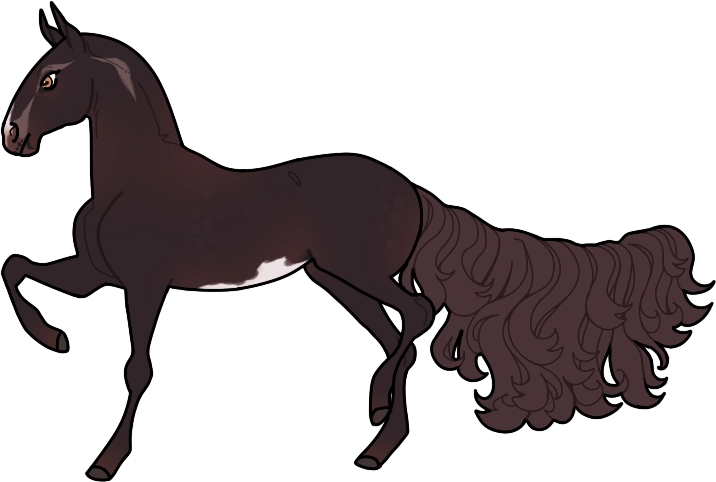
Black Pearl Plum Sabino Rapunzel + Capensis
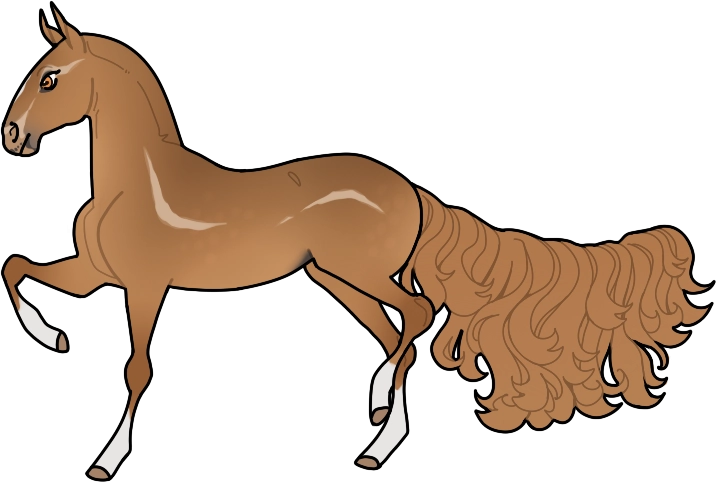
Ginger Rapunzel + Capensis
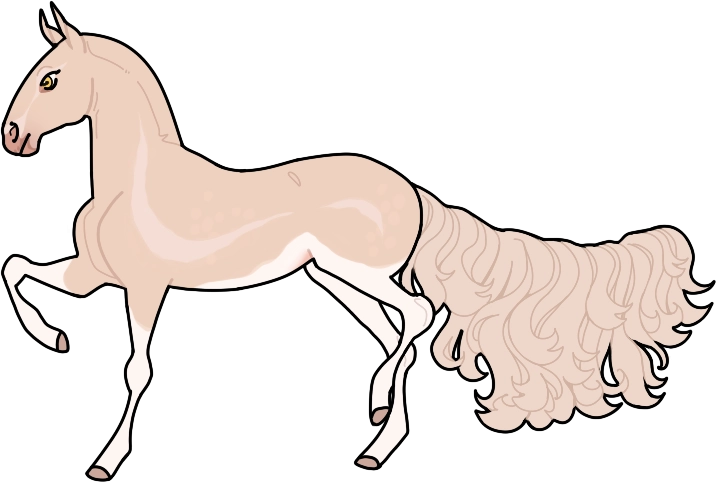
Cremello Splash Rapunzel + Capensis
25 results found.